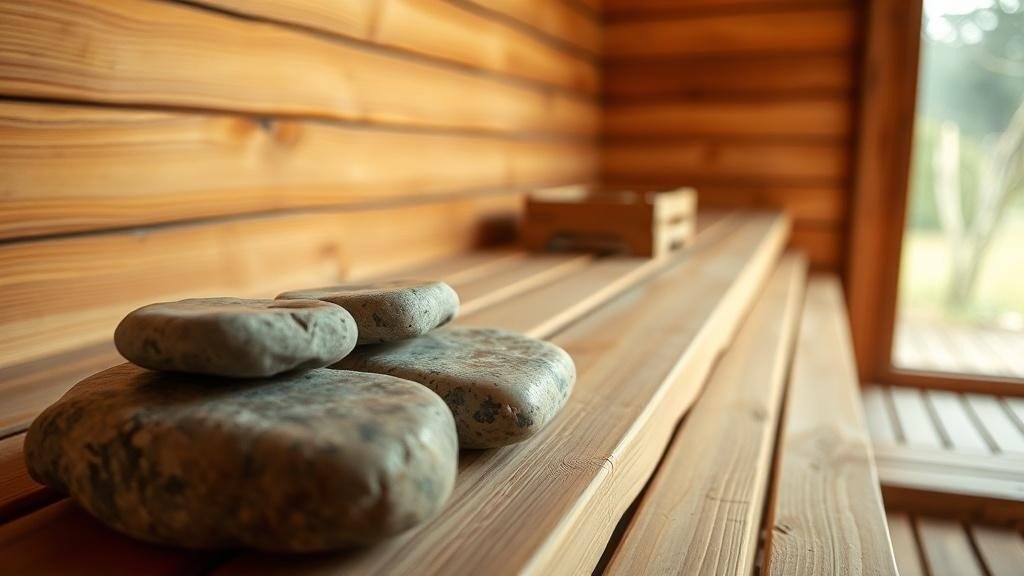
Good sauna and cold-plunge guidance around outdoor sauna complete guide should sound like someone has actually installed and used the setup. Space, power, drainage, heat-up time, and routine all matter.
Last October I helped a friend in Vermont unload four crates from a freight truck into his driveway. He’d ordered a 6-by-7 cedar cabin sauna kit, spent the previous weekend pouring a small concrete pad, and had an electrician lined up for Wednesday. By Friday evening we were sitting in 185°F heat, looking out through the glass door at leaves coming down in the dark. Total elapsed time from delivery to first session: five days, and two of those were waiting on the electrician’s schedule. That timeline is the real pitch for a pre-cut, pre-drilled sauna kit, and it’s worth understanding what makes the difference between a build like his and the ones that stall out half-finished in somebody’s backyard.
The Honest Calculus: Product Spec vs. Site Prep
A kit purchase is roughly half product decision and half site decision, but most buyers spend 90% of their research energy on the unit and almost none on the pad, the electrical run, or their local climate. The same $7,000 kit can feel like a steal on a well-prepped slab with a clean 240V circuit, or a nightmare on settled gravel with an undersized breaker.
Custom builds with identical dimensions can run three to six weeks from contractor mobilization to first session. A pre-cut kit compresses that to a weekend of carpentry (two people, basic tools) plus whatever the electrician needs. That’s the value proposition. But the carpentry is the easy part.
What to Actually Read on the Spec Sheet
Spec sheets trip people up because they bury the stuff that matters and highlight the stuff that doesn’t. Forget the lifestyle photography. Here’s the short list worth checking before you commit:
Wood species and joinery. Pre-cut tongue-and-groove cladding in cedar, hemlock, thermo-aspen, or redwood is the standard for a reason. Cheap kits skip the tongue-and-groove and rely on butt joints with felt backing. Those builds leak heat and look weathered within two seasons. If the listing doesn’t specify joinery type, that’s your answer.
Heater sizing. Match the heater to the cabin volume using the manufacturer’s published sizing chart, not a forum post from 2019. Undersized heaters run constantly and burn out early. Oversized heaters cycle hard and waste energy. Neither is what you want.
Cold plunge specs (if applicable). Check chiller horsepower, filtration micron rating, ozone/UV sanitation, and tub material. A 1/3 HP chiller can hold 50°F in a small insulated tub in a temperate climate. It will struggle badly in a hot garage in August.
The Pad, the Wire, and the Permit
This is where builds succeed or fail, and it’s the least glamorous part of the conversation.
Pad. A 4-inch compacted gravel pad with drainage is enough for a barrel unit on flat ground. A reinforced concrete slab (also about 4 inches) is the right call for a cabin sauna in cold or wet climates, running roughly $4 to $7 per square foot installed. A pad that settles or cracks is far more expensive to fix once there’s a 1,200-pound sauna sitting on top of it.
Electrical. A typical traditional sauna heater pulls 4.5 to 9 kW on a dedicated 240V circuit at 30 to 50 amps. This is not weekend DIY territory. A licensed electrician should run the circuit, pull the permit, size the breaker, and tie into your main panel. Cutting corners on 240V work is how house fires start. Full stop.
Ventilation. Outdoor saunas need an intake vent under the heater and an adjustable exhaust on the opposite wall near the ceiling. Indoor builds usually need a passive vent to the outside or a properly sized exhaust fan. Skipping ventilation means stale air and uneven heat.
Permits. Some counties exempt detached structures under 200 square feet from building permits, but the electrical permit for a 240V circuit is almost always required regardless. Call your local building department before you order anything.
What the Research Actually Shows
The most cited sauna research is the Laukkanen 2015 cohort published in JAMA Internal Medicine. The study followed 2,315 middle-aged Finnish men for 20 years and found a dose-response relationship between sauna frequency and reduced cardiovascular mortality. Men using a sauna 4 to 7 times per week saw roughly half the cardiovascular mortality of those using it once a week. That’s a striking number, though it comes with the usual cohort-study caveats (healthy-user bias, self-selection, a culturally Finnish population that treats sauna use the way Americans treat showers).
A 2018 BMC Medicine follow-up from the same research group reported lower dementia incidence at the highest sauna frequencies. The plausible mechanism involves heat acclimation, improved endothelial function, and a heart-rate response that resembles moderate-intensity exercise.
For a home user, a reasonable on-ramp looks like 20-minute sessions at 170°F to 195°F, two to four times per week. Hydrate before and after. Step out if you feel lightheaded. This isn’t a test of willpower.
Anyone with a cardiac history, uncontrolled blood pressure, or who is pregnant should talk to a physician before starting. The research is encouraging for healthy adults, but a study population of Finnish men does not automatically generalize to everyone.
All-In Costs and the HSA Question
The sticker price on a sauna kit is never the all-in number. Budget the unit, the pad, the wiring, permits, and a small reserve for accessories and first-year maintenance.
Sauna kits: $2,490 for an entry barrel kit. $6,000 to $10,000 for a mid-tier cabin with a quality heater. $12,000 to $16,980 for a panoramic glass-front or premium thermo-aspen build. Add $400 to $900 for a gravel pad, $1,200 to $2,400 for concrete, and $600 to $1,800 for the electrical run.
Cold plunge setups: $4,500 to $7,500 for a residential insulated tub with an integrated chiller. $9,000 to $14,000 for a commercial-grade stainless build with full filtration. Stock-tank DIY setups land closer to $400 to $900, but you’re buying and hauling ice every session.
Appraisers won’t add dollar-for-dollar value for a sauna, but a well-built outdoor wellness setup is treated as a selling feature in Northeast and Pacific Northwest markets. Think of it like a hot tub with better longevity and lower chemical costs.
On the tax side: a residential sauna is rarely HSA or FSA eligible unless a clinician issues a Letter of Medical Necessity for a documented condition. Eligibility is patient-specific. Talk to your tax advisor before assuming a purchase qualifies.
See also: How to Choose a Crypto Exchange for New Users: A Complete Guide
Picking the Right Build for Your Situation
An outdoor barrel sauna heats in 25 to 35 minutes and lives on a small pad. An indoor cabin heats faster but eats living space and requires venting. An infrared cabin runs at lower temperatures (120°F to 150°F) and plugs into a standard outlet, but it produces a different physiological response than a traditional Finnish sauna. These are not interchangeable.
Cold plunges separate similarly. A purpose-built insulated tub with a 1 HP chiller holds 39°F to 45°F all day. A stock-tank with ice bags can hit the same temperatures, but the routine gets old fast. A chest-freezer conversion is cheap but lacks filtration and is mechanically marginal (and, honestly, a little janky for a permanent setup).
The right answer is almost never the cheapest unit or the most expensive one. It’s the build that matches your climate, your space, your electrical capacity, and the routine you’ll actually maintain three months from now. For a longer reference comparing actual model lineups and price tiers, see this guide. It breaks down sizing, wood species, heater wattage, and install considerations in enough detail to bookmark before you start a build.
FAQs
Is a sauna kit safe during pregnancy?
Pregnant adults should not start a new sauna or cold-plunge routine without explicit clearance from their OB-GYN. Core temperature elevation carries real fetal risks, particularly in early pregnancy. This is a clear case where you defer to your physician.
How loud is a sauna kit?
A traditional sauna heater is silent during operation. A cold-plunge chiller runs at roughly 45 to 55 dB at one meter, comparable to a quiet conversation. Place the chiller where the hum won’t bother neighbors or interior bedrooms.
Can I run a sauna kit year-round in cold climates?
Yes, with caveats. Outdoor saunas are designed for cold weather and benefit from a longer pre-heat window in winter. Cold plunges with insulated tubs and integrated chillers handle below-freezing ambient temps if the chiller’s rated operating range allows it. Check the manufacturer’s spec sheet for low-temperature performance limits.
What is the lifespan of a quality sauna kit?
A well-built cedar or thermo-aspen sauna lasts 15 to 25 years with light annual maintenance. Heater elements are usually replaced once during that span. Stainless-steel cold-plunge tubs last 15 to 20 years; chillers are typically replaced or rebuilt every 6 to 10 years.
Do I need a permit for a sauna kit?
Some municipalities exempt detached structures under 200 square feet from building permits. The electrical permit for a 240V circuit is almost always required. Call your local building department before ordering.
How long does it take to assemble a pre-cut sauna kit?
Most pre-cut cabin kits take 6 to 12 hours of assembly work with two people. Barrel kits tend to land on the shorter end. The real timeline bottleneck is usually the electrician’s schedule, not the carpentry.
What’s the difference between a traditional sauna and an infrared sauna?
A traditional sauna heats the air to 170°F to 195°F, producing convective and radiant heat. An infrared cabin operates at 120°F to 150°F and heats the body more directly. The physiological responses differ, and most of the research (including the Laukkanen cohort) was conducted using traditional Finnish saunas.
Disclaimer. This article is general consumer information, not medical advice. Heat and cold therapies carry real cardiovascular load. Anyone with arrhythmias, uncontrolled hypertension, Raynaud’s phenomenon, recent cardiac events, or who is pregnant should consult a physician before starting any new sauna or cold-plunge routine.
Any 240V electrical work should be completed by a licensed electrician under the appropriate local permit.
HSA and FSA reimbursement on wellness equipment is patient-specific and depends on a Letter of Medical Necessity from a clinician. Talk to your tax advisor before assuming a purchase qualifies.