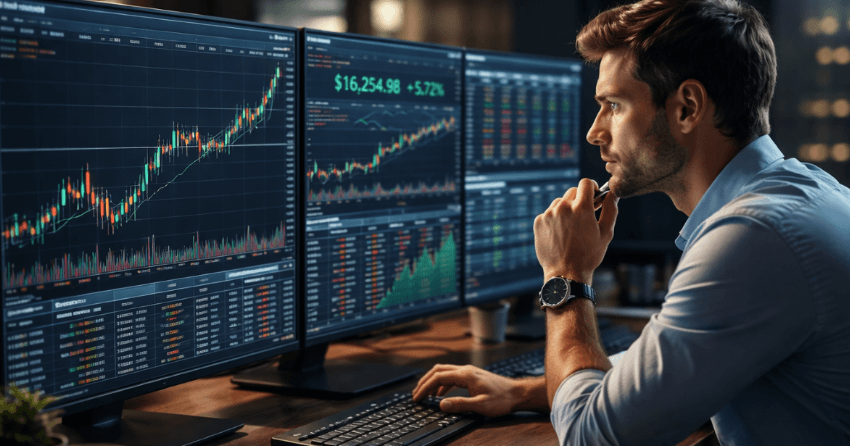
The global financial landscape has evolved rapidly over the past decade, creating more opportunities for investors, institutions, and independent traders to participate in international currency exchange markets. Increased digital connectivity, economic globalization, and advanced trading technologies have transformed the way financial markets operate. The growing accessibility of forex market trading platforms has enabled participants to engage with international currencies, market trends, and financial instruments from virtually anywhere in the world.
Today’s world is more interconnected and moving towards global economies; traders want to embrace data-driven decisions, automation, and follow the market to manage financial risks and find opportunities. In today’s extremely competitive international financial markets, speed, transparency, and flexibility – combined with operational efficiency – are the expectations that define trading.
Mastering Modern Trading: Building Smarter Forex Strategies
Modern trading requires a structured approach that blends market awareness, analytics, discipline, and strategic execution. The evolution of forex market trading has empowered traders with real-time insights, automated tools, and intelligent platforms that support precision and efficiency.
● Understanding Currency Market Movements
Money is subject to change and influenced by the status of the world, inflation, geopolitics, and monetary policies. Traders are eager to realize these factors, as they can help acquire a better understanding and direction of the markets, while understanding the value of any potential trading opportunities or shares that may exist in a financial landscape that is evolving.
● Strengthening Technical Analysis Skills
Technical analysis assists merchants to assessing the past prices, support zones, resistance areas, and market trends. New platforms provide indicators and charting software, improving market analysis and aiding traders with structured decisions in dynamic markets.
● Improving Risk Management Practices
Risk management plays an important part in paving the path to stable trading. Some traders cope with exposure to too much market volatility and other unpredictable financial developments by using a variety of methods, such as position sizing, stop-loss strategies, diversification, and capital allocation.
● Responding to Global Economic Developments
Financial markets around the world are responsive when it comes to economic announcements, employment documents, changes in interest rates, and geopolitical events. When traders are informed, it will enable them to manage the unexpected market changes and changing trader moods better.
● Developing Trading Discipline and Consistency
Discipline of emotions is one aspect of trading. Regular implementation, planning, and decision-making under the cover of control allow traders to stay stable without getting panic reactions in times of turbulent market conditions.
Tech-Driven Evolution: How Innovation Is Reshaping Trading
The progress of financial tech has increased marketability, transaction speed, and analytic power in both modern markets. Online platforms are still reshaping the manner in which traders are engaging the financial systems in the world.
● Accessing Real-Time Market Data
Advanced platforms provide real-time pricing, financial news, financial calendars, and market analytics to traders. Real-time access provides traders with a better decision-making process on the trading procedure in a changing market environment by making timely decisions.
● Supporting Automated Trading Systems
Autopiloting allows traders to trade on pre-set conditions of the market. Algorithms help to remove emotional bias and to improve consistency and operational efficiency in terms of trading operations.
● Enhancing Mobile Trading Accessibility
Mobile trading allows a trader to monitor the markets, as well as their positions, and even trade from a mobile device. Having greater access means that traders at national or international levels can react faster to the markets and be more flexible in their trading.
● Integrating Advanced Analytical Tools
Modern sites offer technical indicators, predictive analytical tools, and the ability to monitor the performance of the trader’s strategy, which helps them measure their trading strategy and optimize trading accordingly with objective measurable parameters and analysis of the past.
● Strengthening Platform Security and Reliability
Online trading has been growing with a strong emphasis on secure digital infrastructure. High levels of encryption, authentication processes, and monitoring of transactions are beneficial in safeguarding traders’ information and enhancing operational dependability.
Global Advantage: Why Financial Hubs Attract Investors
The global financial hubs remain as central as ever in creating global investing action, liquidity, and financial innovation. They have a very well-built infrastructure and regulatory functions that help to enable good and supportive trading conditions.
● Enabling International Market Connectivity
Financial centers bridge investors, financial institutions, and businesses in various global marketplaces. This connection improves the convenience of access to foreign investment opportunities, diverse financial products, etc.
● Encouraging Financial Innovation and Growth
Still, the major financial centers are leading digital finance innovations, trading infrastructure, payment solutions, and enterprise investment solutions. Innovation helps to improve competitiveness and effectiveness in operations.
● Strengthening Regulatory Transparency
A well-functioning financial ecosystem features well-designed regulations that engender market confidence amongst investors and a greater level of transparency and accountability of the operations with respect to trading conditions.
● Expanding Professional Trading Communities
World financial centers pull talent in the form of analysts, brokers, financial consultants, and financial institutions that help in enhancing cooperation, education in the market, and the growth of the industry.
● Improving Long-Term Investment Opportunities
International financial facilities and diversified trading conditions assist traders in managing their portfolios and achieving long-term investment flexibility in international markets.
Conclusion
The world financial markets are also undergoing technological evolution, with smart trading and deeper integration across international markets. Current traders have shifted their focus to strategic analysis, risk management, trade automation, and overall improvements in trade efficiency to achieve better long-term performance. The rising contribution of a Dubai forex broker illustrates the area’s growing influence in the development of international trading infrastructure, financial innovation, and world-class investment access.
In today’s evolving financial ecosystem, firms like Anax Capital are playing a key role by enabling modern market participation through secure, technology-driven trading environments. With a strong focus on real-time analytics, educational support, and advanced platform capabilities, such organizations contribute to enhancing trader confidence, improving decision-making, and supporting long-term engagement in global financial markets. Through innovation, transparency, and professional market access, they help traders navigate international financial markets with greater efficiency, confidence, and long-term strategic support.