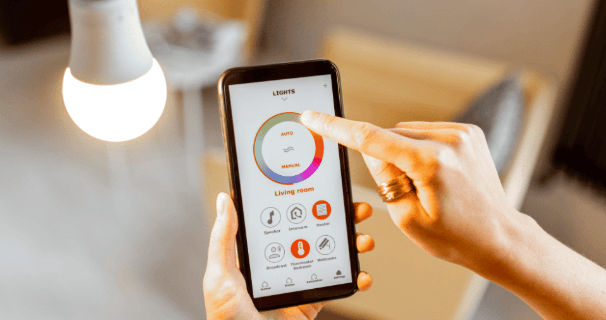
Smart lighting systems are networked, sensor-driven configurations that go beyond manual switches. They rely on bulbs, hubs, sensors, and protocols to enable occupancy-based and time-aware control while remaining scalable and interoperable. The architecture offers modular components, secure communication, and low latency, balancing local control with optional cloud features. Choices range from standalone to hub-based platforms, impacting cost and flexibility. Understanding use cases and interoperability invites further exploration of practical gains and integration challenges.
What Smart Lighting Is and Why It Matters
Smart lighting refers to lighting systems that can be controlled, automated, and adjusted via networked devices, sensors, and control algorithms rather than being manually operated only. The concept enables precise occupancy-driven and time-based management, enhancing operational transparency.
This approach emphasizes autonomy, scalability, and interoperability, delivering measurable improvements in energy savings while preserving user freedom to configure environments according to individual or organizational needs.
smart lighting, energy savings.
How the Core Tech Works (Bulbs, Hubs, Sensors, and Protocols)
How do the core components—bulbs, hubs, sensors, and protocols—interact to form an integrated smart lighting system?
The description succinctly models data flow from sensing events to control commands, mediated by hubs and networks.
Bulbs fundamentals underpin performance; protocols overview governs interoperability, security, and latency.
The architecture emphasizes modularity, reliability, and scalability within a flexible, standards-driven framework for configurable environments.
Choosing Your Setup: Platforms, Costs, and Use Cases
Platforms, costs, and use cases determine the practical configuration of a smart lighting system by balancing feature sets, budget constraints, and operational requirements; the paragraph outlines how platform choices—standalone versus hub-based ecosystems, cloud-enabled services, and local control—map to deployment scalability, maintenance obligations, and interoperability with existing infrastructure.
Platform compatibility and energy cost planning frame decision criteria for scalable deployments.
Maximize Comfort and Efficiency: Tips, Tricks, and Troubleshooting
Efficient lighting performance hinges on aligning user comfort with system responsiveness, enabling intuitive adjustments while preserving energy savings. The discussion emphasizes actionable tips, troubleshooting methods, and empirical checks. It incorporates comfort psychology insights to tailor environments without compromising efficiency.
Practical steps include routine energy auditing, sensor calibration, daylight integration, and fault diagnosis, ensuring stable, responsive lighting that supports freedom through controlled, measurable comfort.
See also: Smart Living Made Simple
Frequently Asked Questions
How Secure Are Smart Lighting Systems Against Hacking?
The question: Smart lighting systems face notable security vulnerabilities, yet robust encryption standards mitigate many risks; privacy risks persist through data collection; regular firmware updates and strong authentication are essential to reduce exposure and enhance resilience against hacking.
Can Smart Lights Improve Sleep Quality and Circadian Rhythm?
Smart lights can improve sleep quality and circadian rhythm by aligning blue-light exposure with natural cycles; a bedroom study showed melatonin shifts when evening brightness decreased. They enable precise timing, reducing wakefulness and supporting consistent circadian alignment for flexible users.
Do Smart Bulbs Work During Power Outages or With Backups?
During power outages, smart bulbs typically fail to operate unless equipped with backup power options; their power outage behavior depends on device design and firmware. Backup power options include uninterruptible power supplies and integrated battery modules for critical lighting.
Are Smart Lights Worth It for Rental or Short-Term Spaces?
Smart lights are often worth it for rentals, offering automated ambiance and energy monitoring; however, their rental viability depends on maintenance, firmware expectations, and guest usage. Short term practicality hinges on installer support and occupant turnover.
How Do I Migrate Lighting Scenes Across Different Brands?
To migrate scenes and achieve cross brand compatibility, one should export scene data to a neutral format, then import into target ecosystems, ensuring device IDs, color profiles, and timing cues align; protocol translation may be required for seamless operation.
Conclusion
As systems awaken, components align, and signals converge. The architecture reveals its rhythms: bulbs respond, sensors listen, hubs arbitrate, protocols secure. Yet the true potential remains just beyond the dimmest glow, gated by choices in platform, scope, and interoperability. When precision meets adaptation, energy yields to intent, comfort to control. The next step—optimizing across use cases—unfolds with measured latency, keeping the observer poised at the edge of automation’s quiet breakthrough.